Same Fabric, Different Garments
Navigating identity and tailoring my stance in psychoanalytic psychotherapy training
5/29/20264 min read
There is a quiet, persistent anxiety that has haunted me, and that apparently haunts many a trainee psychotherapist. It rarely makes it onto the official syllabus, yet it fills the spaces of personal therapy and late-night reflections. It is the fear of institutional cloning - the dread that the rigorous, often unyielding machinery of psychoanalytic psychotherapy training will slowly scrape away my individuality, flattening my natural spontaneity (or, as someone put this in my individual case, my enthusiasm), until I am nothing more than a bloodless, uniform replica of a "classical analyst" (or really, any other object from the wet dreams of those who teach me).
I entered the field acutely aware (or so I thought) of what "they" were looking for, so it was easy for me to succumb to the paranoid-schizoid worry that my authentic self was simply not the right fit.
Recently, a vivid dream and a brilliant sartorial metaphor from my training psychotherapist completely transformed my outlook on this struggle, offering a profound lesson in how we internalise our training without losing our souls.
The Dream of the Feminine Dress
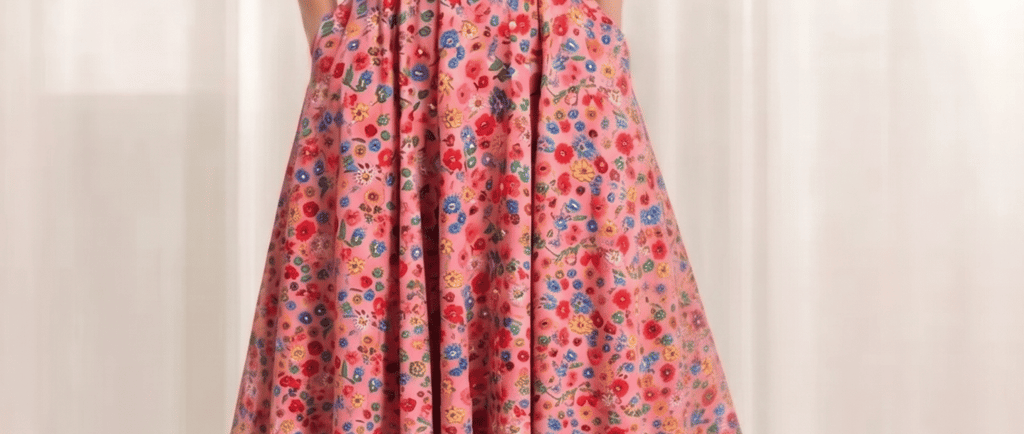
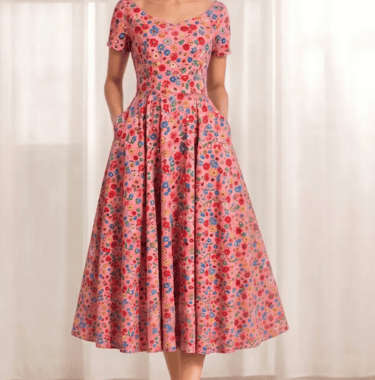
In the dream, my training psychotherapist was wearing a beautiful, highly detailed, and distinctly feminine dress. The imagery was so striking that upon waking, I could perfectly recall the exact texture of the fabric, the flow of the design, and the vibrancy of the pattern.
When we unpacked the dream in our session the following day, she asked a deceptively simple question: “Would you like to have a dress like that?”
My response was immediate and candid: “No. It is objectively beautiful, but it is completely not my style. I wouldn’t wear it.”
She wouldn't be a psychoanalytic psychotherapist, if she didn't push further. This was, after all, one of the most intricately detailed dream descriptions I had ever brought to the room; the garment clearly held some weight. She asked if there was any version of that dress that I could actually see myself being comfortable in.
I thought about it for a moment and replied: “Well, if we turned it into a jumpsuit, then yes, I would very much wear it.”
The Interpretation: The Fabric of Training
What followed was an interpretation that brought an immediate, long-awaited peace of mind. My therapist bypassed the superficial aesthetics and went straight to the core tension I had been battling for months.
"It is a bit like with the training," she said. "We all go through the same training - we are given the exact same fabric. But the final garment we cut from it, is entirely different for each of us, just as a jumpsuit differs from a dress. There will be some 'twinning,' but each of us turns it into something unique to ourselves."
For weeks leading up to this session, we had been talking about the formative, or sometimes de-formative, pressures of training. I had been terrified that the process would force me to become a detached, emotionless, rigid caricature of a Freudian ideal. I was terrified that who I am, with all my natural energy, neurodivergence, and outspokenness, was fundamentally incompatible with the work and definitely a pain in the back for my tutors.
That interpretation was a psychological green light. It was the realisation that I didn't have to choose between clinical depth and personal integrity. I can absorb the theory, respect the boundaries, and hold the frame - using the exact same foundational "fabric" - and still fashion a professional identity that fits my unique outline.
The Stage Fright and the Plant Prop
But the dream didn't end with the dress. There was a second, more vulnerable movement to the narrative.
In the dream, there was a missing solo piece in an instrumental track which I needed for a singing performance. Feeling the time pressure, I decided the best option was to play it live, and I stepped up to a piano to practise. Instantly, a palpable, suffocating anxiety took over. I stood over the keys terrified of getting it wrong, paralysed by the thought of what would happen if I hit the wrong note.
As the panic peaked, my training psychotherapist - still wearing her vibrant dress - approached the piano. She stood super close to me, stretching out her arm to hold me. In the dream, I could physically feel her "propping" me, acting exactly like a sturdy support stake for a fragile plant. Her close, warm, unmoving presence was deeply reassuring, absorbing the worst of the stage fright.
When we associated about this part of the dream in our session, the clinical piece clicked into place. This wasn't just about surviving the training; it was about the nature of the therapeutic alliance itself. We figured out that the dream was showing me a fundamental truth: I do not have to figure out the tune, the way to play it, or even if I need to play it at all, completely alone. The popular song 'You never walk alone' comes to mind when I think of it now...
Conclusion: Playing the Solo
Training often feels like being handed a highly complex piece of music and being told to play an incredibly difficult instrumental solo. The temptation is to copy the master note-for-note out of fear, or to freeze at the keys because the risk of making a mistake feels too high.
But true clinical wisdom lies in understanding that the master text is there to give you structure, not to steal your voice. The training, including personal analysis/psychotherapy shouldn't be an assembly line of identical mirrors; it is a shared creative enterprise.
The fabric is mine to cut into a jumpsuit that fits my own frame. And when I step up to the piano to find my melody, I am not performing in isolation. I have an authentic witness by my side - someone who will stand close enough to prop me up when the anxiety hits, holding the space steady while I learn to play my own song.